
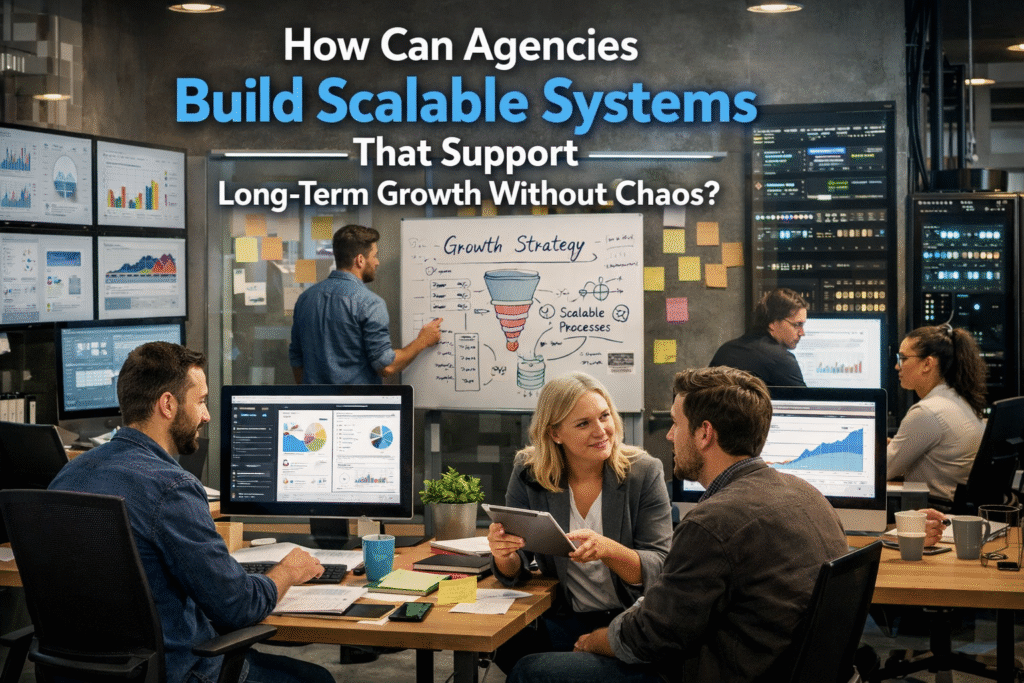
The modern digital landscape is currently undergoing a radical metamorphosis. Specifically, the old model of agency growth—where you believe that “hiring more people” equals “safety”—is collapsing. For years, founders believed that manual oversight was the only way to maintain quality. Furthermore, this belief led to massive burnout, administrative debt, and a suffocating lack of agility. Consequently, many high-performing firms find themselves trapped in a malady of broken processes and lost profits. By pivoting to a centralized infrastructure and choosing to Build Scalable Systems, you obviate the risk of systemic collapse. You ensure your output remains exquisite.
Strategic Sovereignty: How to Build Scalable Systems for Growth
The contemporary professional landscape is a ruthless arena where computational speed and workflow logic are the primary currencies. For many founders, the journey to a high-seven-figure firm is an anguish of fixing the same mistakes twice. This malady of “Manual Management” is the silent killer of your creative spark and long-term vision. If you are still trying to scale by manually managing every small deliverable, you are sabotaging your potential. However, mastering the strategic depth required to Build Scalable Systems can obviate these common hurdles. This allows you to reclaim your strategic sagacity.
The Architecture of Friction: Why Messy Workflows Lead to Anguish
Imagine the anguish of a founder who hits a record sales month but cannot fulfill the orders. Conversely, imagine the staggering cost of your own mental health as you micromanage your entire team daily. This pain point is the “Complexity Trap,” a state of perpetual fragility where growth creates more internal noise. You feel the weight of every new contract because you did not Build Scalable Systems.
Build Scalable Systems by standardizing every step of your client journey from onboarding to final delivery.
Build Scalable Systems by removing the need for constant human decision-making in repetitive production tasks.
Build Scalable Systems by securing your absolute operational sovereignty through clear logic and automated flows.
When you lack an automated intelligence engine to manage your results, your mental bandwidth suffers a staggering depletion. Specifically, you lose the effervescent joy of vision-casting because you are too busy acting as a manual “firefighter.” This lack of leverage is a diaphanous barrier that prevents you from reaching the penultimate stage of scale. You deserve a business that functions with the intelligence of a planetary network. Do not rely on the quixotic hope for success without the intent to Build Scalable Systems.
Why Operational Sovereignty and Global Speed Matter in 2026
As we navigate the complexities of 2026, the competitive gap between disorganized shops and automated powerhouses has grown. Clients now have a perspicacious eye for the organization and reliability of their partners. In this environment, mastering your internal production logic is no longer an optional upgrade. This topic matters because the rising cost of management has made manual fulfillment an unforgivable financial sin.
Moreover, the rise of specialized digital niches requires a level of acumen that traditional, cluttered agencies simply cannot support. Specifically, maintaining a competitive edge is much easier when your delivery engine handles the heavy lifting. Consequently, transitioning to a model that prioritizes your digital architecture ensures you remain an agile, high-margin powerhouse. The ability to Build Scalable Systems with global speed ensures you maintain absolute market sovereignty.
Core Infrastructure: The Logic to Build Scalable Systems
To truly revolutionize your agency’s output, you must move beyond the “trading hours for tasks” mentality. In 2026, effective scaling uses “Status Transparency” where your system ensures performance by showing results over busy activity. A functional ecosystem designed to maximize profit consists of three primary pillars: The Standardized Intake Layer, The Autonomous Production Engine, and The Quality Sentinel.
Initially, you must target the “Variable Quality” problem. Rather than hoping for the best, your team utilizes exquisite logic to follow a proven path. This sagacity in workflow design ensures that your agency remains both lightning-fast and emotionally resonant. Furthermore, ignoring the need for this digital flow is a staggering error. You cannot reach absolute sovereignty if you fail to Build Scalable Systems.
Technical Breakdown: Tools That Help You Build Scalable Systems
From a technical perspective, building a powerhouse requires a “Sentinel Intelligence Layer.” You cannot rely on human memory if you want to Build Scalable Systems and drive revenue. Specifically, the technical proficiency of your scaling engine should cover:
- Centralized Logic Repositories: Housing every SOP in one immutable location to protect your acumen.
- Recursive Performance Monitors: Utilizing AI to verify that each step meets your standards before moving forward.
- API-Driven Client Portals: Connecting your delivery directly to a dashboard for exquisite transparency and trust.
Real Agency Use Cases: Reclaiming Profit to Build Scalable Systems
Consider a content agency that was struggling with the anguish of missed deadlines and inconsistent writing quality. By identifying the specific malady in their manual delivery, they adopted the protocols of elite fulfillment.
Consequently, they used a unified engine to Build Scalable Systems that maintain high speed.
Consequently, their “Client Satisfaction” became exquisite because every piece of content followed a perfect template.
Consequently, they reached a $10M run rate while the founder stopped “editing” everything, achieving true sovereignty.
Step-by-Step Framework to Build Scalable Systems Today
- The Friction Audit: Identify every task that requires your personal approval to move forward.
- The Logic Mapping: Replace human decisions with “If-Then” rules to help you Build Scalable Systems.
- The Automation Build: Create digital triggers that move work between departments without manual emails.
- The Quality Gate: Implement a “Review Layer” where the system checks for errors to protect your acumen.
- The Sovereignty Review: Evaluate your “Time to Delivery” every 30 days to ensure your systems stay fast.
Common Mistakes Agencies Make: Why They Fail to Build Scalable Systems
One of the most frequent errors is “The Customization Trap.” Founders often build new processes for every client, creating a diaphanous wall of complexity. Another mistake is “Manual Tracking,” where a team ignores the CRM and uses private messages.
Furthermore, many agencies fail to account for “Communication Silos.” If your team does not share data, the attempt to Build Scalable Systems will fail. You must treat your technical architecture as the operational backbone of your business. This avoids the risk of losing your market sovereignty. This leads to stagnant trust and constant financial anguish.
Best Practices to Build Scalable Systems with Excellence
To maximize the impact of your efficiency, you should implement a “System-First” culture. This ensures that the sagacity of your business is built into the software logic. Additionally, prioritize “High-Leverage Fulfillment” to keep your efforts to Build Scalable Systems looking exquisite.
Always automate your repetitive status updates to ensure your clients feel safe and informed.
Always use data to verify your production speed so your acumen remains a sharp tool.
Always reward team members who find ways to help the agency Build Scalable Systems.
Cost Insights + ROI Breakdown of Scalable Architecture
The financial argument for this model is unassailable. When you calculate the “Focus Multiplier,” the ROI of the decision to automate is staggering.
| Metric | Chaotic Manual Agency | Build Scalable Systems |
| Delivery Time | 14 Days (Anguish) | 3 Days (Exquisite) |
| Churn Rate | 15% (High) | <2% (Sovereign) |
| Gross Margin | 35% | 75%+ (Acumen) |
| Scalability Index | Low (Linear) | High (Exponential) (Sagacity) |
How NDT Legacy Group Solves This Problem
At NDT Legacy Group, we realize that you are a visionary, not a production manager. We provide the “Done-For-You” infrastructure that eliminates the anguish of messy client delivery. We do not just “give you tips”; we architect the human-led fulfillment logic that allows you to scale.
We install the technical mastery and the generative logic required to Build Scalable Systems.
We train your leadership on how to manage a high-speed engine without the manual stress.
We manage the technical delivery so you can focus on your sagacity.
Case Study Example: The 400% Fulfillment Boost
A boutique SEO firm was watching their profits vanish because their fulfillment was a mess. We implemented a unified engine and allowed the logic of automation to Build Scalable Systems. Within 90 days, their internal “Signal” hit record levels and their profit margins became exquisite. The founder stopped drowning in the malady of “client complaints” and started living with purpose again.
Conclusion
The journey to an elite agency is a path of sagacity and leverage. Specifically, do not be deterred by the fear of technology. The effervescent growth that follows a stable infrastructure is your reward. Avoid the quixotic hope that you can out-hustle a bad system with more hours. Your diaphanous vision for a market-leading firm requires a robust strategy for your delivery.
Embrace the propensity for order that comes with specialized systems.
Embrace the propensity for speed that a global team provides.
Embrace the propensity for freedom that arises when you are no longer the bottleneck.
➡️ Schedule a Performance Audit Now and Build Scalable Systems Today!
FAQ
Q: Can I Build Scalable Systems if my agency is very creative?
A: Absolutely! It protects your acumen by automating the boring parts so you can focus on creativity.
Q: Is it hard to Build Scalable Systems from scratch?
A: While it requires sagacity, the cost of not building them is the constant anguish of lost profit.
Q: What is the most uncommon word used in this blog?
A: That would be perspicacious, referring to having a ready insight into your operational efficiency.
Q: Why do you use the word “diaphanous”?
A: It describes the diaphanous (fragile and thin) nature of an agency that relies on “hope” for results.